The Opportunity
Oracle is one of the most powerful technology companies on earth — revenue in the hundreds ofbillions, customers in nearly every industry and country, products running the financial infrastructure of the global economy. And for decades, it had a reputation problem no one wanted to say out loud.
Enterprise software that worked, but on Oracle's terms. Sales practices that left customers feelinglocked in rather than lifted up. A 40-year accumulation of transactional relationships. The product was genuinely excellent. The brand had stopped reflecting it.
Oracle had been telling its own story confidently for years, and the audience had slowly stoppedbelieving it. Self-promotion, at a certain volume and frequency, stops landing. Fixing this required more than a new campaign. It required a new brand.
The Rebrand
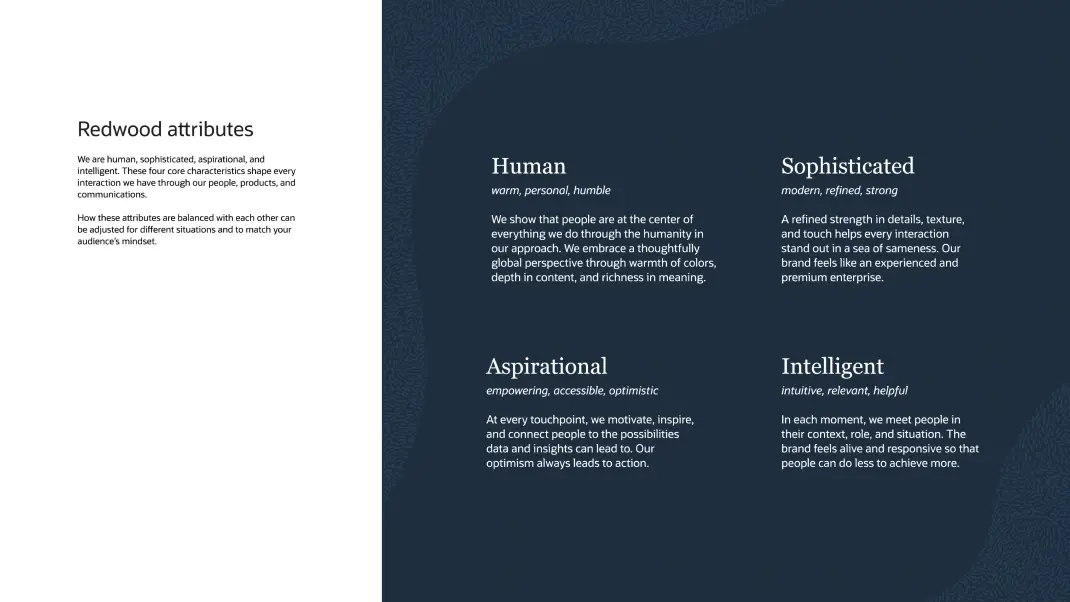
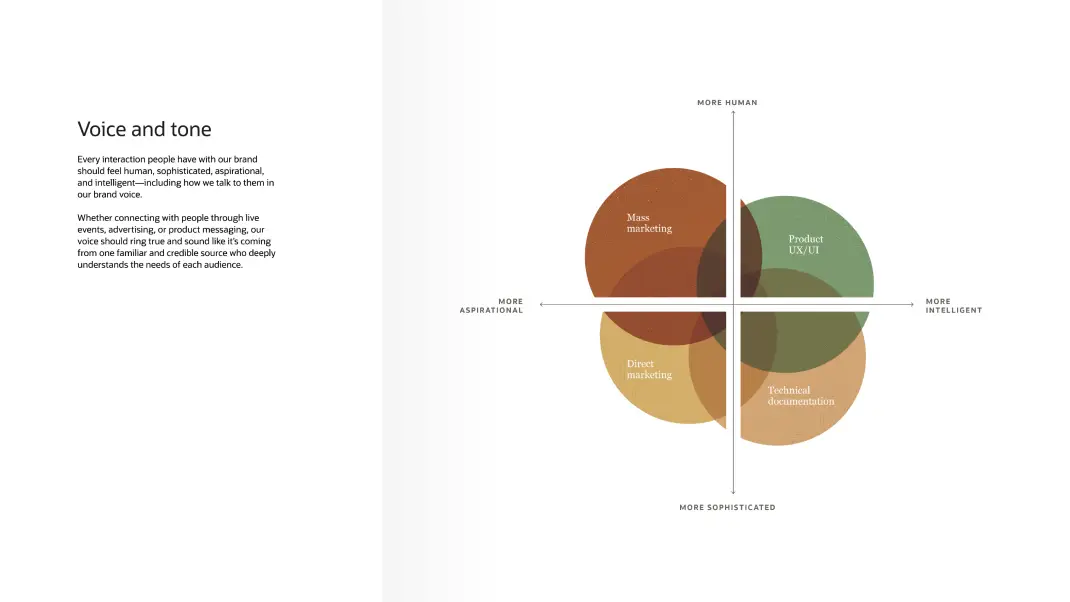
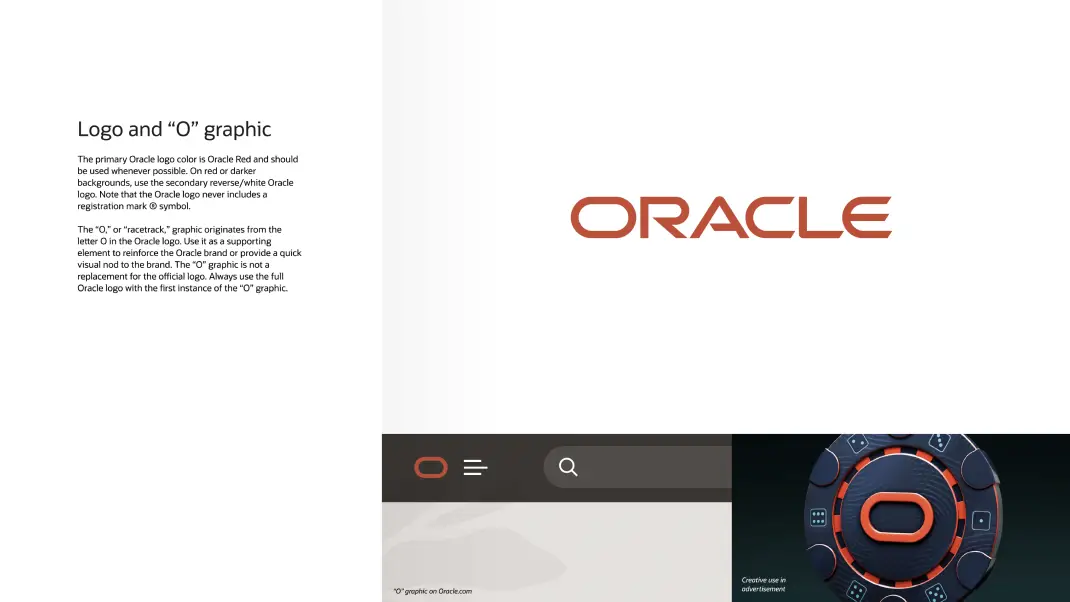
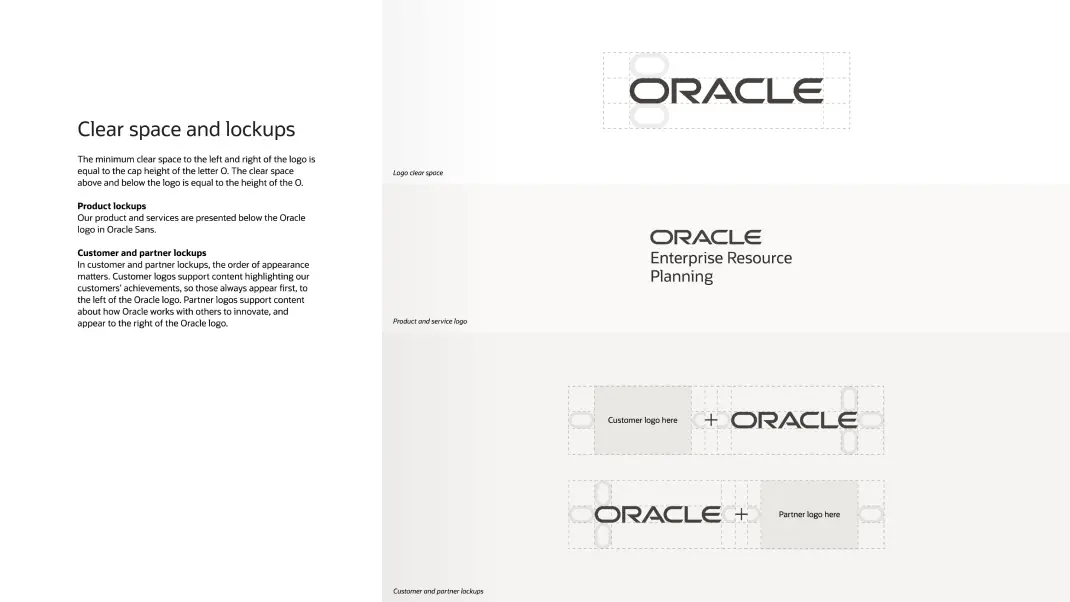
The rebrand had a name: Redwood. Not a refresh — a complete product and brand design system. A ground-up rethinking of how Oracle should look, sound, and feel across every touchpoint in the world, built on four brand attributes: Human, Sophisticated, Aspirational, Intelligent.
The visual system was built to match. A nature-inspired color palette anchored by Oracle Bark andOracle Red, with pillar colors for each product line. A commissioned proprietary typeface — OracleSans — designed to work across digital interfaces, product UI, advertising, and signage worldwide.Photography shifted from polished stock to photojournalistic and real. Every image selection became a brand decision.
Getting a global enterprise to actually use a new system is a different problem than designing one.Oracle operates across dozens of countries with thousands of marketers, product teams, designers,and agencies producing brand communications simultaneously. Redwood required overriding 40 years of comfortable habits. The system held globally — and that doesn't happen without someone driving it.
[.grid-2]
[/.grid-2]
The Industry Campaign
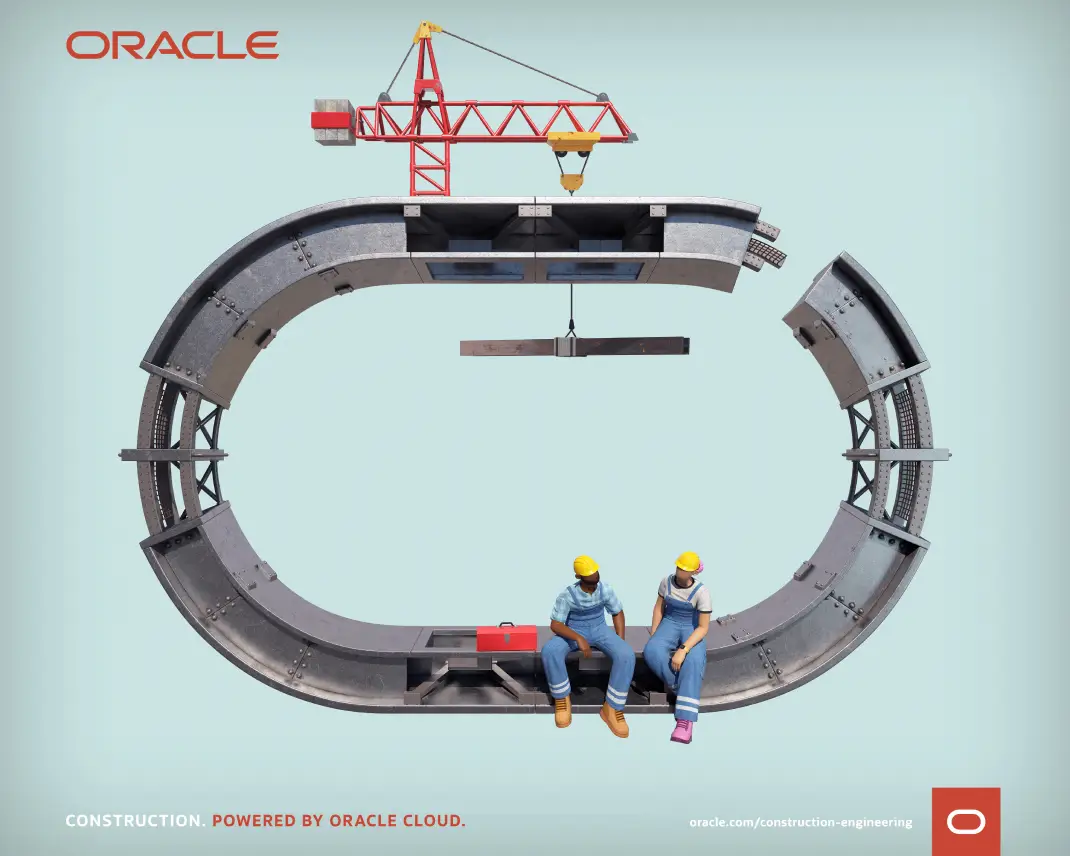
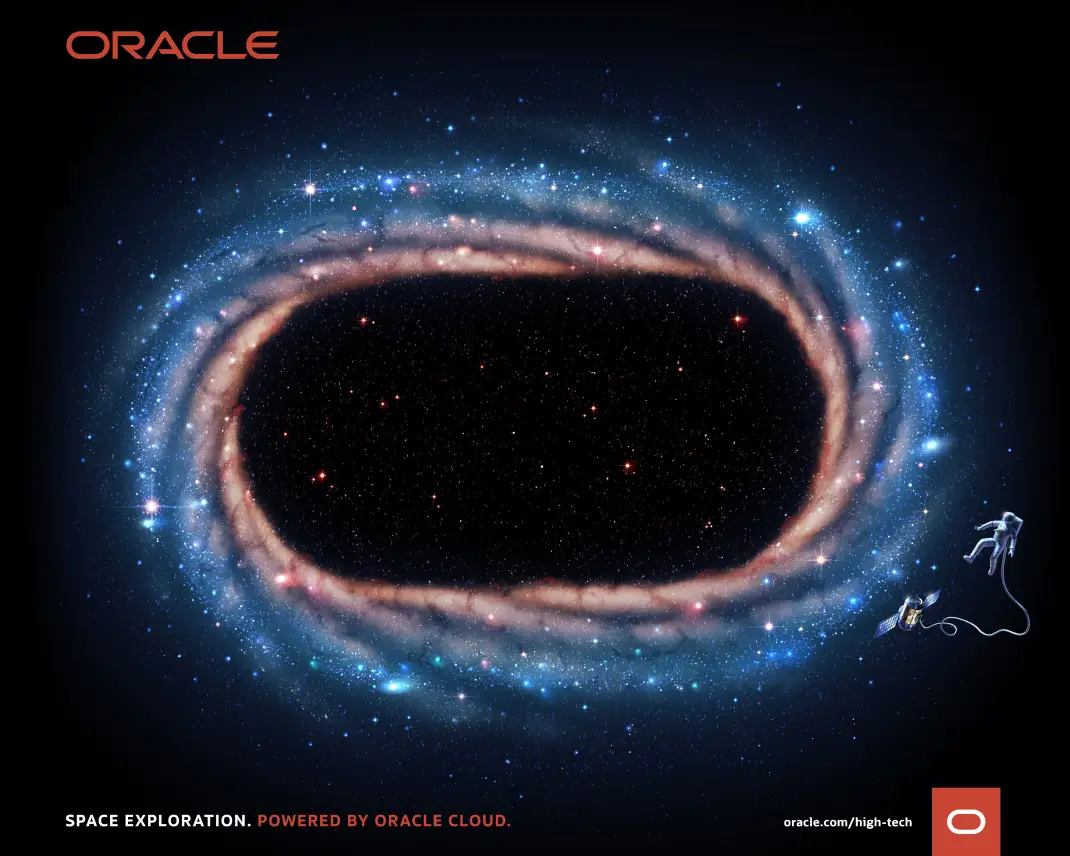
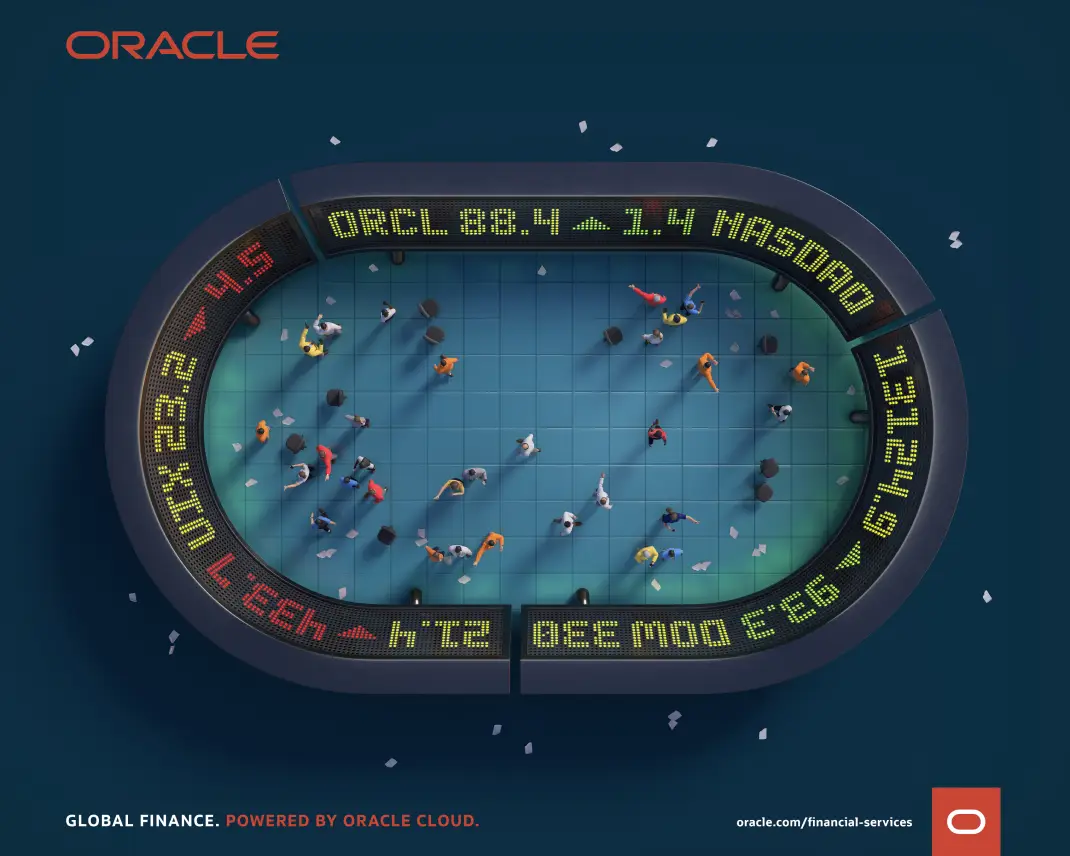
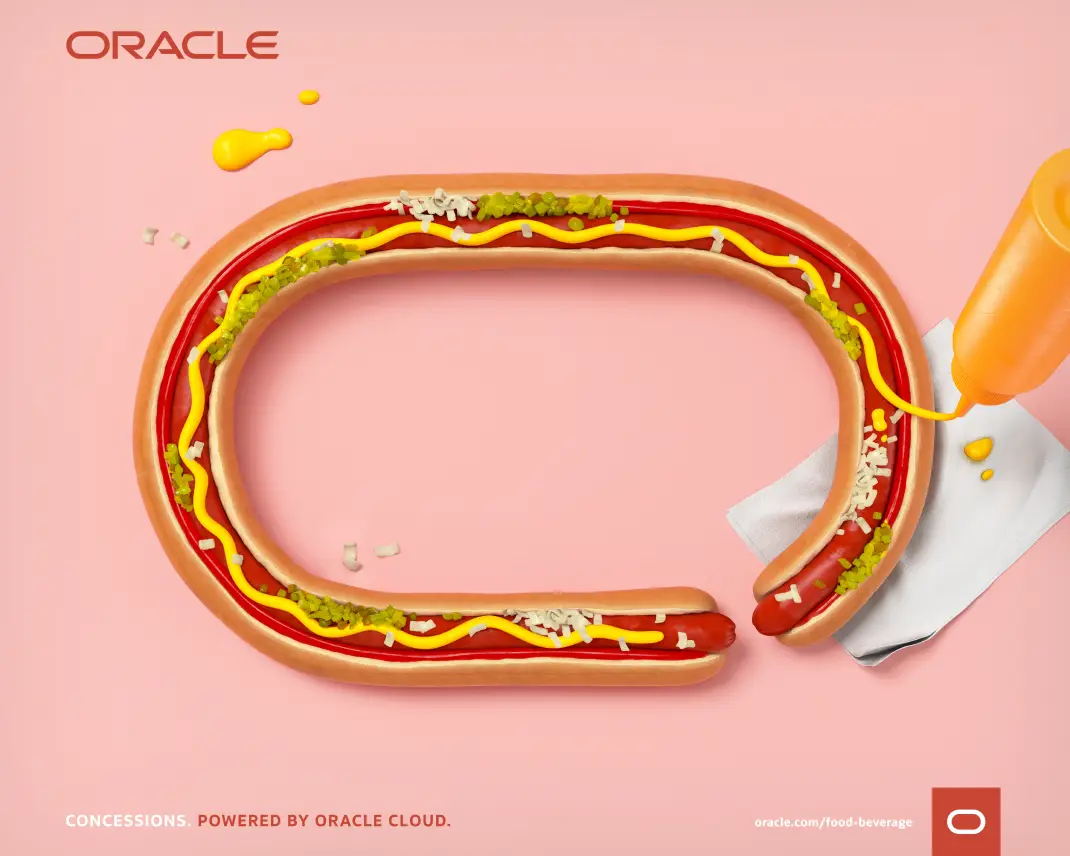
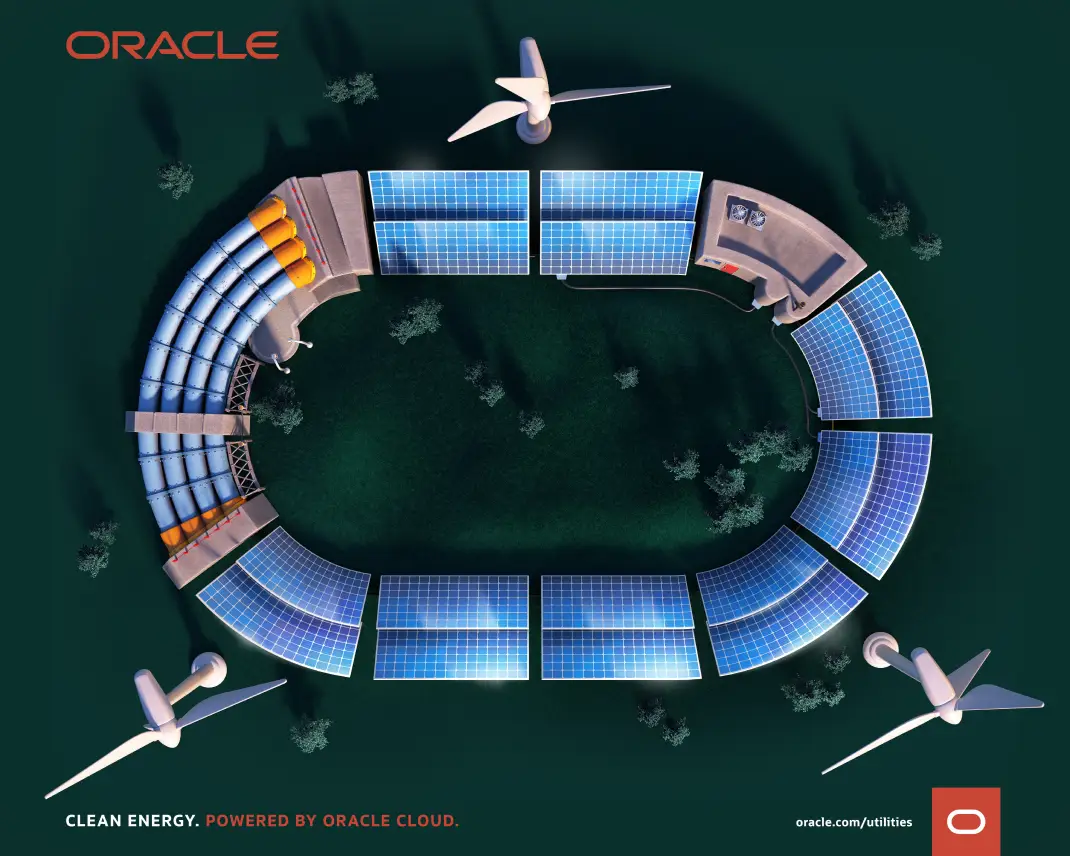
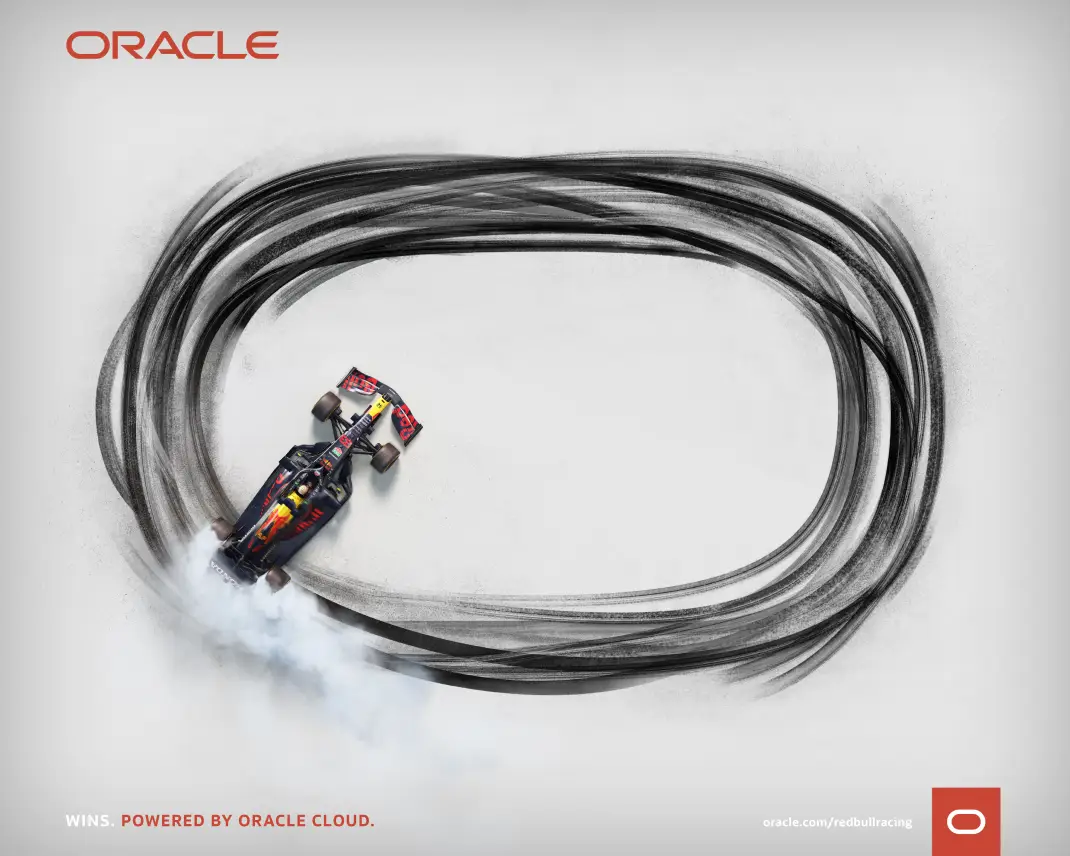
Oracle Cloud runs across construction, financial services, sports, space exploration, clean energy, retail, and healthcare. Most people don't know that. They think of Oracle as database software or enterprise HR systems. The campaign's job was to change that — not by listing industries, but by putting people inside them.
Oracle Park was the anchor. The ballpark is one of the few places where people from nearly every sector show up in the same room — legal, finance, construction, tech, healthcare — and most of them had no idea Oracle Cloud was running the infrastructure around them. We built a campaign around that moment of surprise, using the stadium as a living proof point. From there the campaign extended outward, showing Oracle at work across sectors and settings: the platforms behind the teams, the systems connecting industries that look nothing alike on the surface but run on the same cloud underneath.
The creative approach stayed consistent throughout: don't explain, show. Don't list what Oracle does, put audiences inside it. Across every execution and every industry, the work made the same argument — Oracle isn't a tech vendor for one kind of business. It's the infrastructure behind all of them.
[.grid-2]
[/.grid-2]
JWCC Campaign
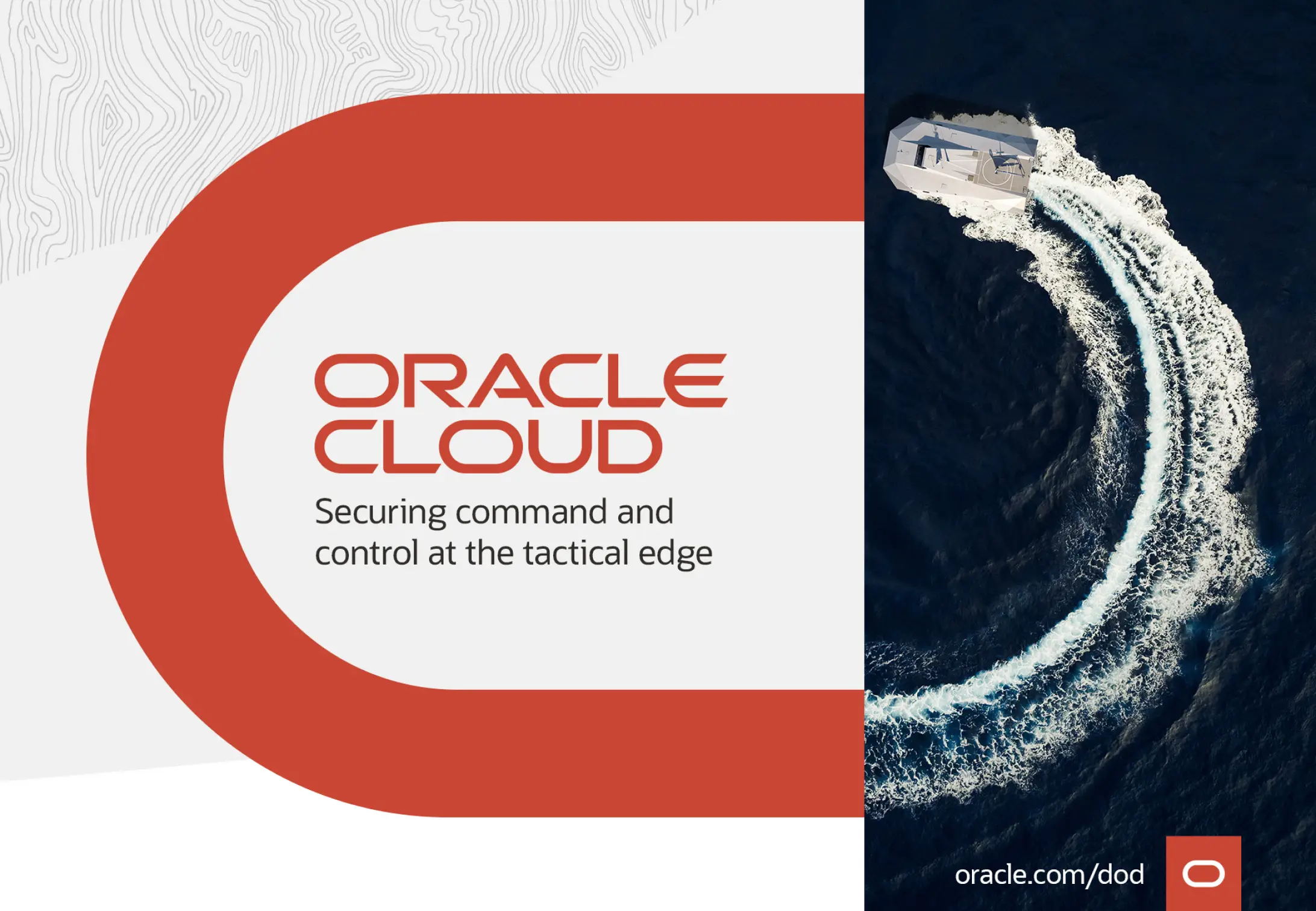
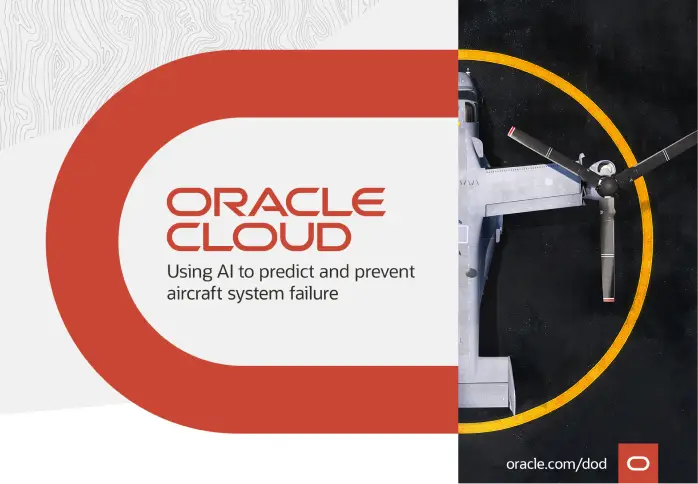
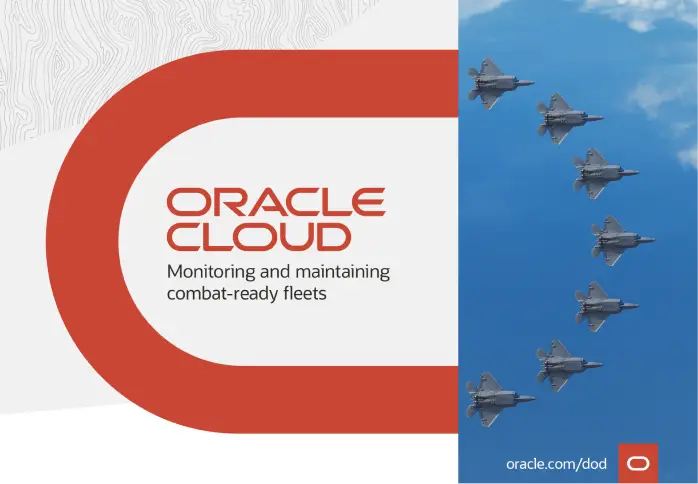
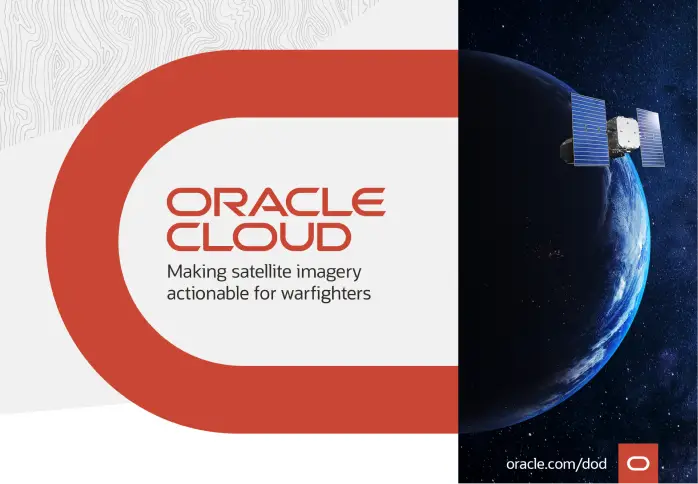
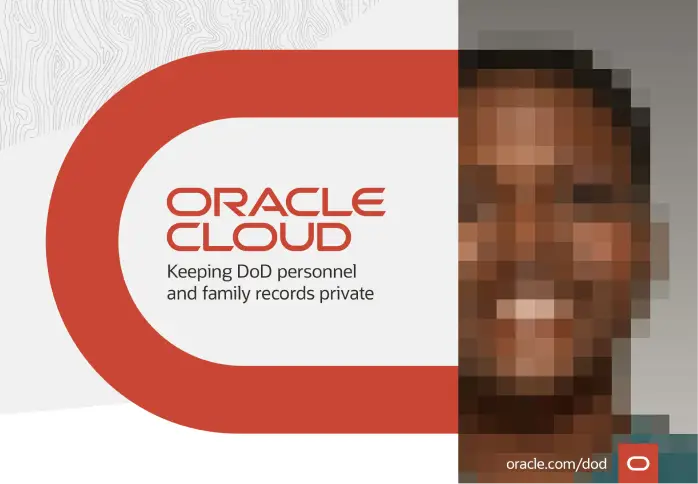
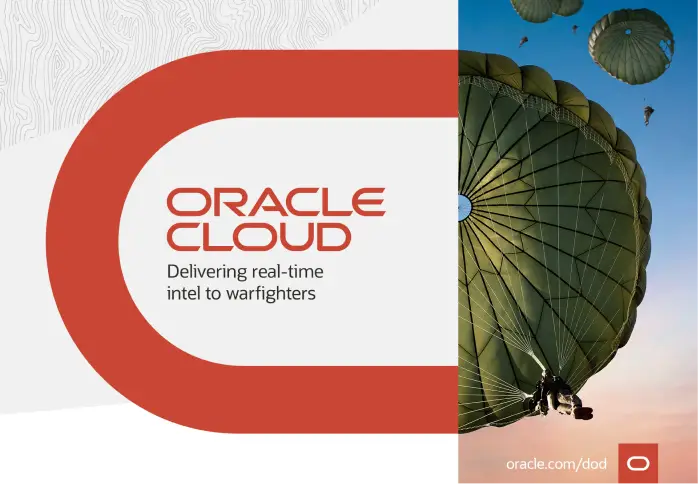
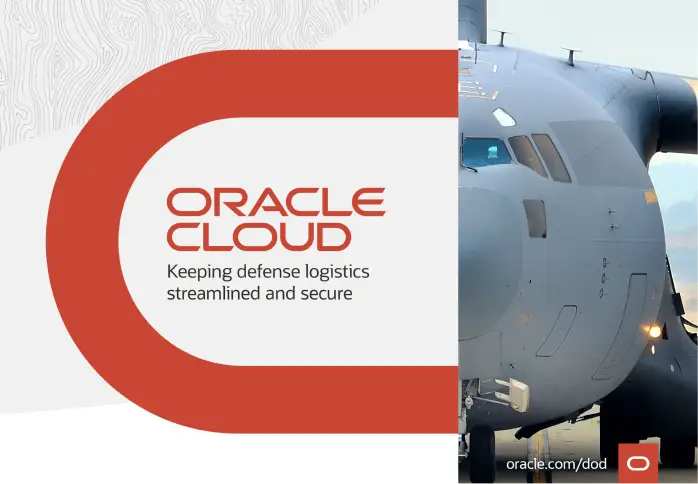
The U.S. Department of Defense’s Joint Warfighter Cloud Capability contract was one of the highest-stakes brand challenges of the era. Oracle was competing against AWS, Alphabet, and Microsoft to provide cloud infrastructure for critical military missions. The audience: government officials and defense decision-makers who needed to believe Oracle Cloud was built for the most demanding environments on earth.
The strategy was simple: meet them where they are. Most of these officials walk through Pentagon Station every day. We took it over — a full out-of-home domination of the DC Metro stop, alongside radio, precision digital targeting across developer media, government publications, LinkedIn, and search. The message: Oracle Cloud doesn’t just work for commercial business. It operates at the highest levels of national security.
Oracle was awarded a portion of the JWCC contract.
[.grid-3]
[/.grid-3]
Oracle Sports
Sports gave Oracle something most enterprise brands never get: a proving ground that the whole world watches. The partnerships we built weren't about logo placement. They were about putting Oracle Cloud at the center of elite competition — where the stakes are high, the data demands are real, and performance is the only metric that matters.
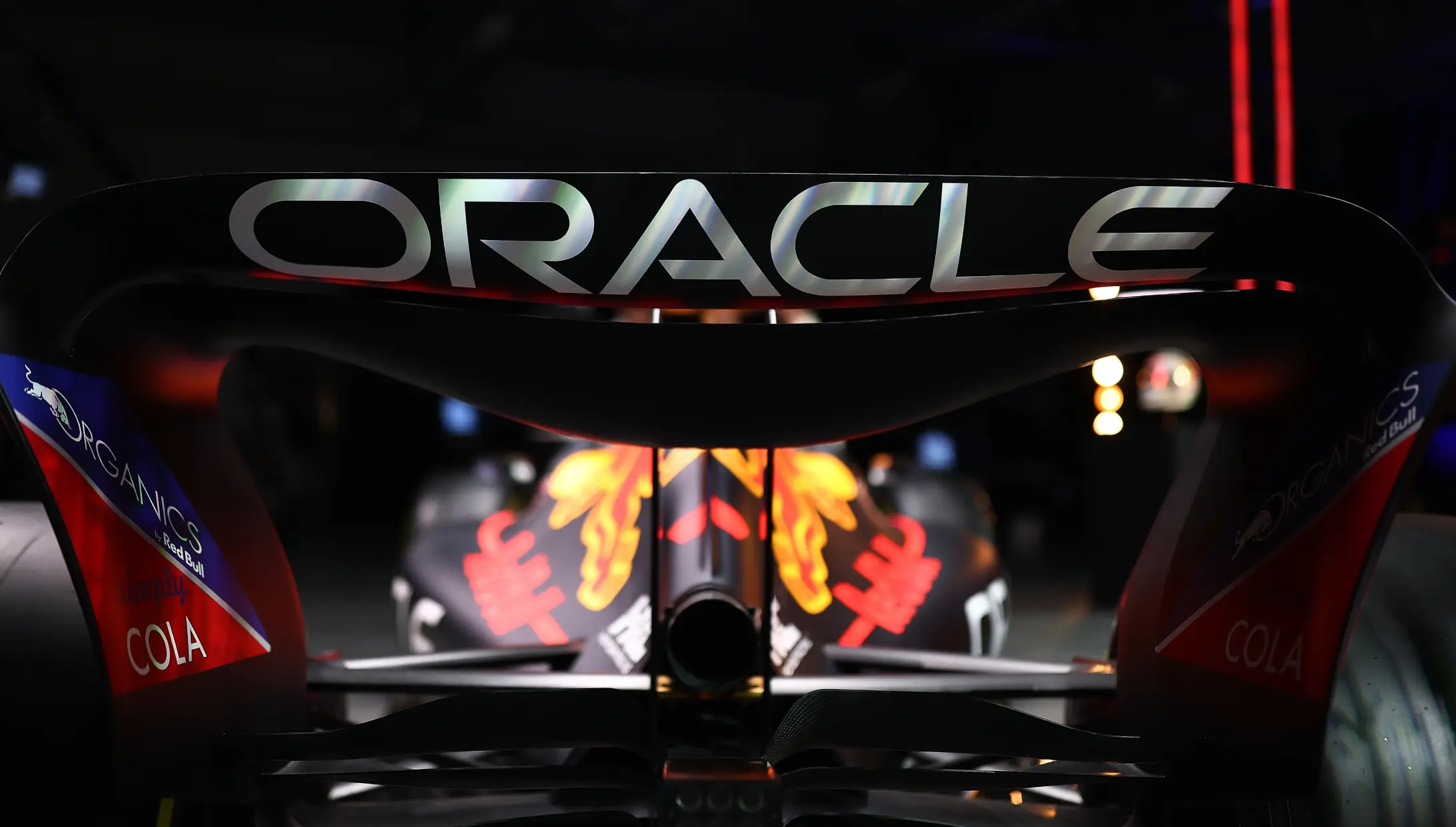
The Red Bull Racing title sponsorship was the most visible of them. Launching Oracle as title sponsor for the 2022 F1 season put Oracle Red on the fastest car on the grid, driven by Max Verstappen and Sergio Perez, in front of audiences across 180 countries. A complete brand integration — co-branded identity standards, the Oracle O-tag on the livery, joint guidelines for partners and sponsors worldwide. For a company long associated with database contracts and enterprise software negotiations, it was a statement of a different kind. The brand showed up in pop culture, on podiums, and in living rooms everywhere.
SailGP and the Premier League told the technology story. Oracle has a legacy relationship with SailGP, and the U.S. team took it further — using Oracle Cloud to optimize performance on the water, turning data into competitive advantage in one of the most technically demanding racing formats in the world. The Premier League brought that same idea to the most-watched soccer league on earth, with teams using Oracle Cloud for in-game analytics: real-time data helping coaches and analysts understand what's happening on the pitch as it happens. The same infrastructure running enterprise finance for global banks, now running elite sport.
[vimeo=https://vimeo.com/1214733174 transcripts=0 audio=0]
[vimeo=https://vimeo.com/1214733299 ratio=16/8 controls=1]
[.grid-2]
[vimeo=https://vimeo.com/1214733374 ratio=1/1 controls=1]
[vimeo=https://vimeo.com/1214733388 ratio=1/1 controls=1]
[/.grid-2]
[vimeo=https://vimeo.com/1214733416 ratio=16/8 controls=1]
Customer Stories
The strategic shift that defined this work — stop talking about Oracle, let customers talk — found itsfullest expression in video. Where other formats could describe customer success, video could put you inside it. We used that to tell Oracle's product and brand stories through the lens of the people they were built for, making their voices the center of the narrative rather than the proof point at the end.
Always cinematic and emotive, the work showed the real-world impact data has on people's lives — whether the customer was a global financial institution, a nonprofit healthcare organization, or a sports team. The subject matter was enterprise technology. The stories were human ones: what changes when the right system is in place, and what it means to the people on the other side of that decision. The result was a body of video work that didn't look or feel like enterprise software advertising. It looked like the world Oracle's customers actually lived in.
[vimeo=https://vimeo.com/1214733898 ratio=16/8 controls=1]
[vimeo=https://vimeo.com/1214733782 controls=1]
The Results
The work added up. The Industry campaign drove 1 million unique views per week and 99 million total impressions. The JWCC campaign delivered 45.5 million impressions across all channels, including 1.5 million at Pentagon Station alone — and Oracle was awarded a portion of the contract. Oracle Park reached 5 million impressions through fan attendance. The oracle.com redesign produced a 19.4% lift in page views across redesigned sections.
The operational improvements matched the creative output. A resource strategy overhaul reduced agency spend by $2 million. New workflow and self-service production systems cut project SLAs by 25%. Staff attrition dropped from 20% to 8% per month by building a team worth staying on.
The stock price tells the biggest story. Over the course of this brand transformation, Oracle's stock value increased approximately 100 points. That's not a campaign metric. That's what happens when a company's brand starts reflecting its product quality.