The Opportunity
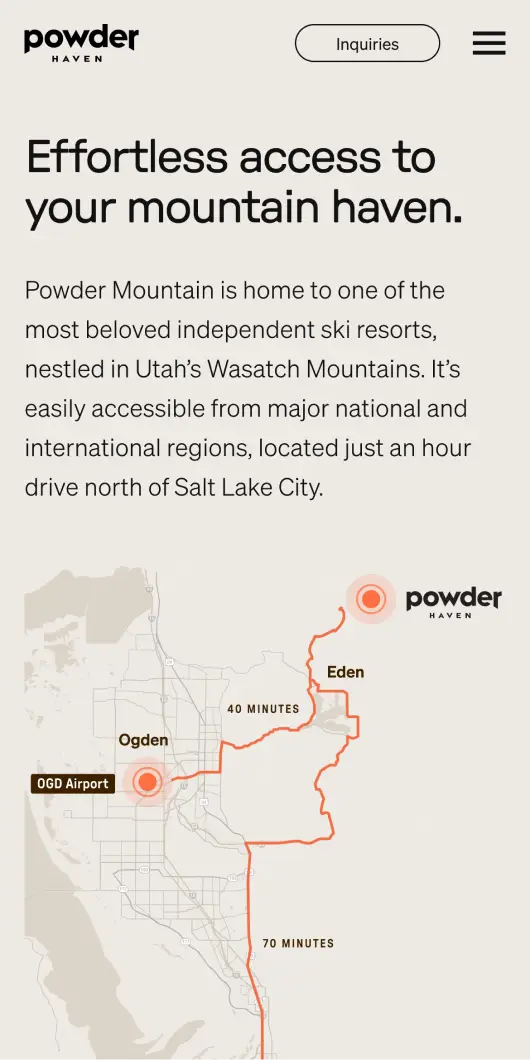
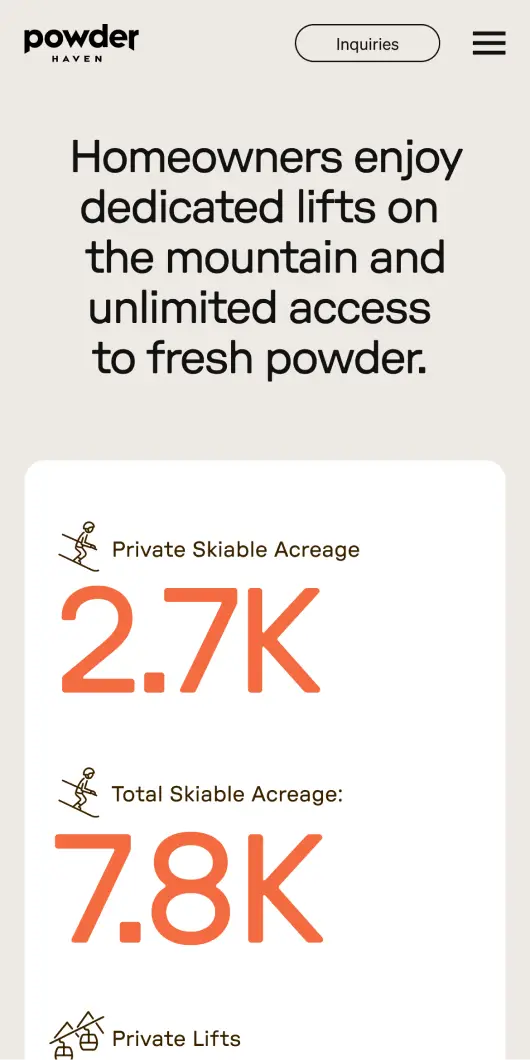
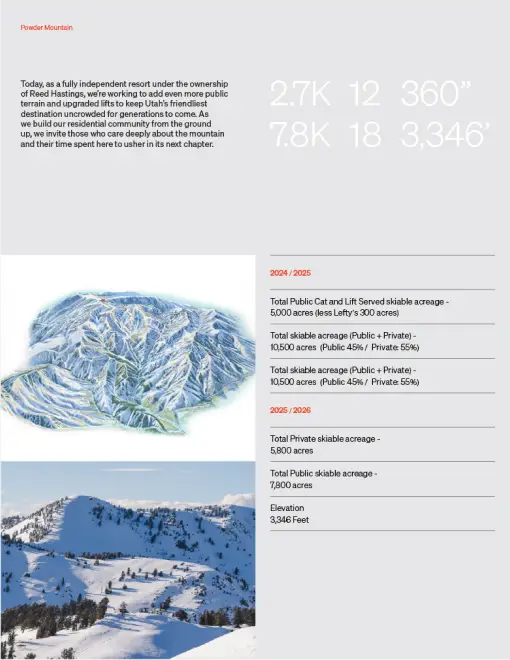
Powder Mountain is one of the most storied ski resorts in North America. Established in 1972, it sits atop the Wasatch Mountains in Eden, Utah: 10,500 total skiable acres, world-class terrain, and a reputation for uncrowded powder days that has made it a quiet obsession among serious skiers for generations.
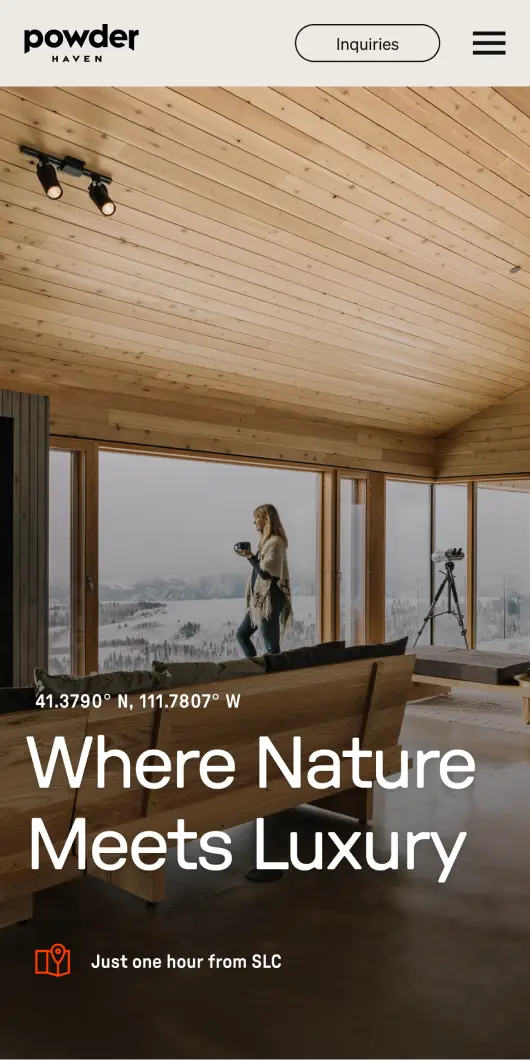
Then Reed Hastings acquired it. The vision: transform Powder Mountain into a private residential community called Powder Haven, while keeping the public mountain alive and even expanding it. A place for high-net-worth mountain lovers who want private skiing, design-forward architecture, elevated hospitality, and a creative culture that looks nothing like Yellowstone Club.
The brief from the Powder team: figure out who this is for, build a brand that speaks directly to them, and make the brand do the work of driving real estate sales. That's where Us Agency came in.
Strategic Foundation
Before any visual direction was explored, we needed to understand the market. Not just the ski resort market, but the specific psychological territory Powder Mountain could credibly own. The first finding was a gift: Yellowstone Club had created the category, and then alienated a significant portion of it. Member after member told us the same story. The terrain was great. But the culture had shifted. The clientele had changed. The social posturing that private skiing was supposed to eliminate had somehow become the entire point. One current member put it plainly: "It's for the people I know that don't need to ski with Tom Brady."
The ultimate luxury is abundant powder.
That insight shaped everything. There was a values gap at the top of the market, and a price gap to match. The alternatives were thin: Moonlight Basin lacked the terrain. Wasatch Peaks Ranch had brand problems. Most serious buyers had simply settled. Powder Mountain's right to win wasn't just terrain or price. It was values.
We defined the audience archetype as the Grounded Contrarian: high-net-worth mountain lovers who have their own view on what luxury really looks like. Avid skiers drawn to backcountry-like experiences. Not looking for a place to be seen. Willing to pay more for experience, not opulence. Their defining insight: "The ultimate luxury is abundant powder." From there, the positioning wrote itself: a haven from superficiality. The brand essence: What a mountain is meant to be.
[.screen-grid.powder.full]
[video=https://v.kley.co/videos/us/powder-strategic-01-crop_processed.mp4]
[/.screen-grid.powder.full]
[.screen-grid.powder]
[/.screen-grid.powder]
The Identity System
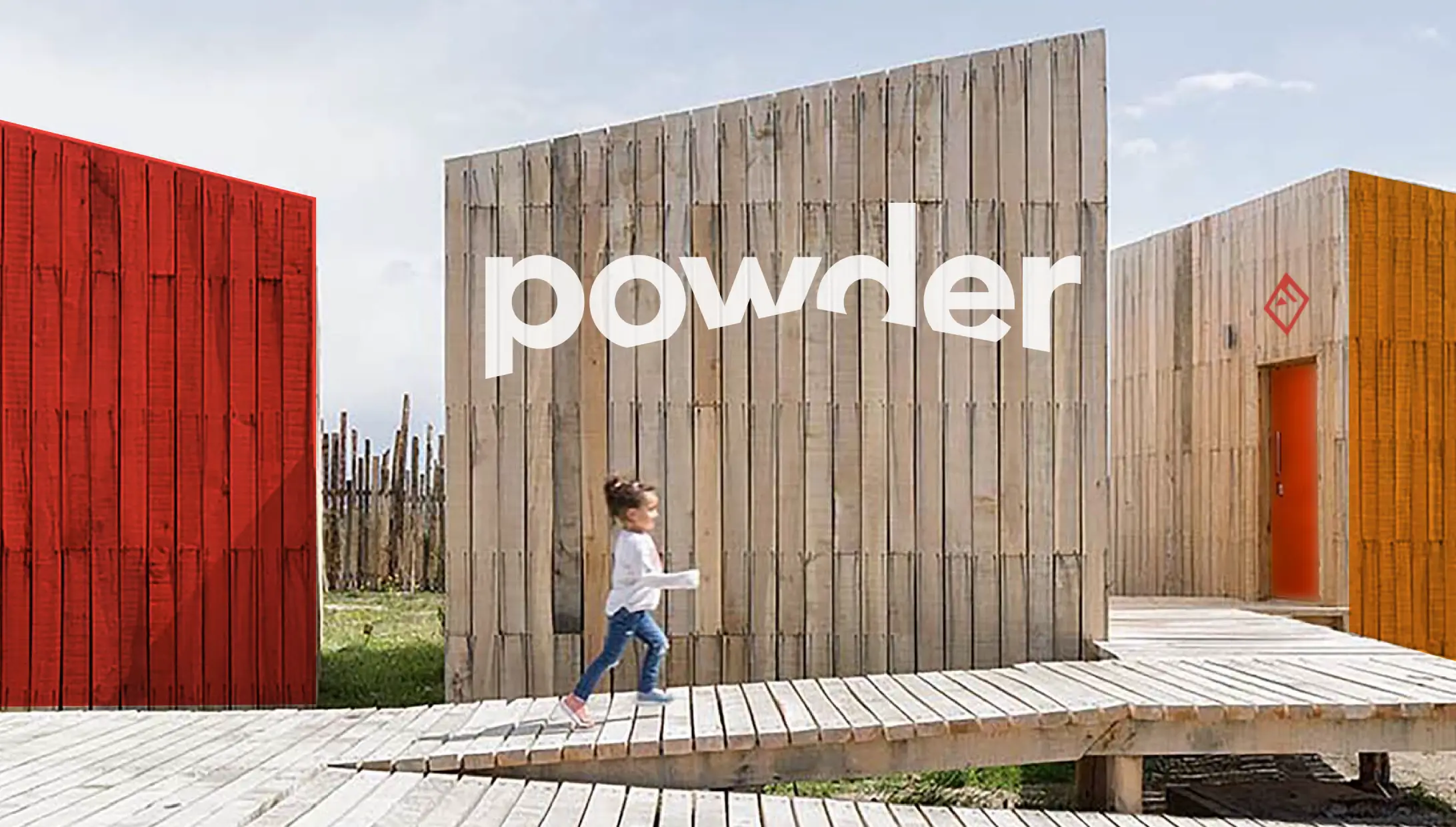
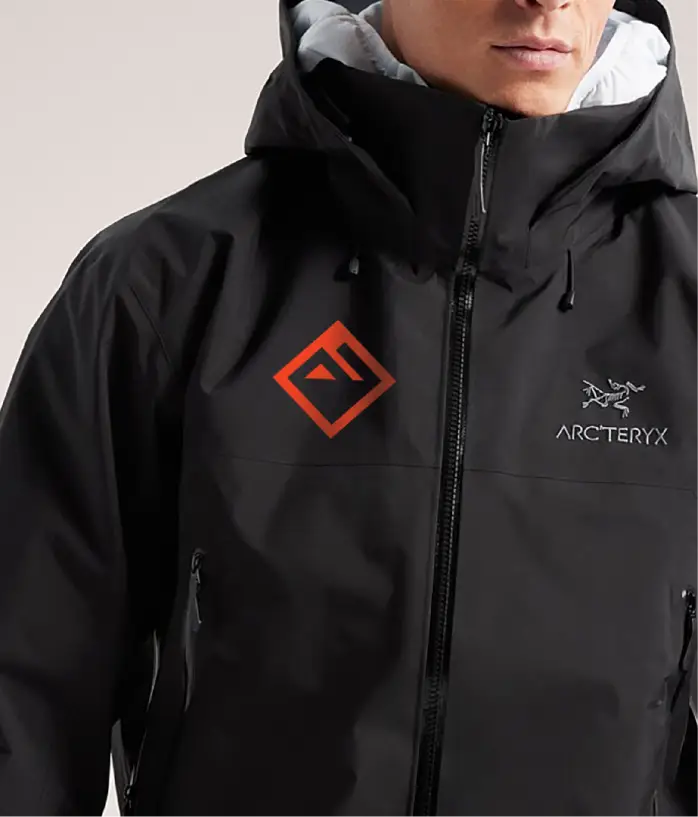
The visual direction was built to make Powder Mountain feel unlike any other private ski club, and unlike any other luxury real estate property. The brief we gave ourselves: contemporary and indigenous. Rooted in the mountain and its artistic ethos. Organic and modern. Rugged, raw, dynamic, soulful, and sophisticated simultaneously.
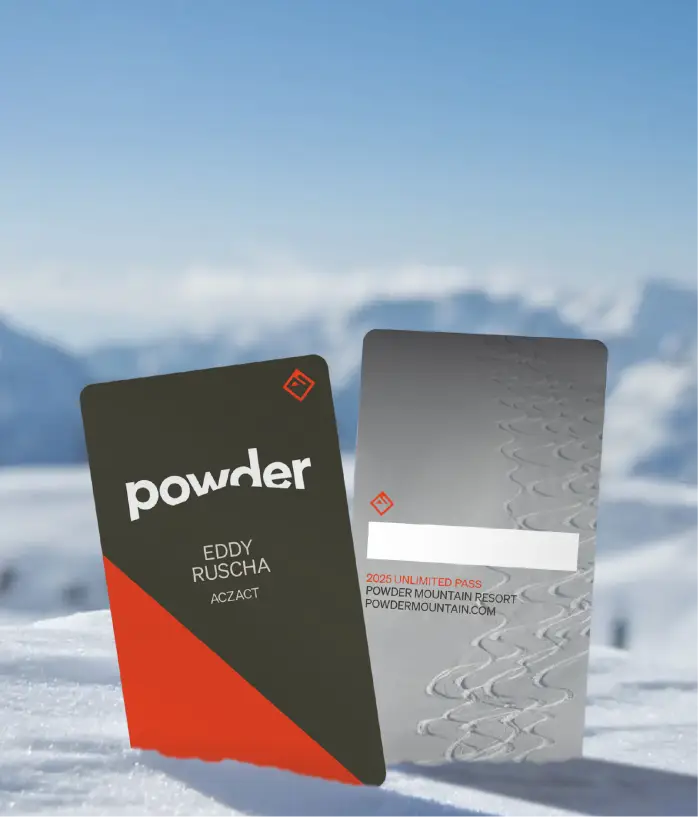
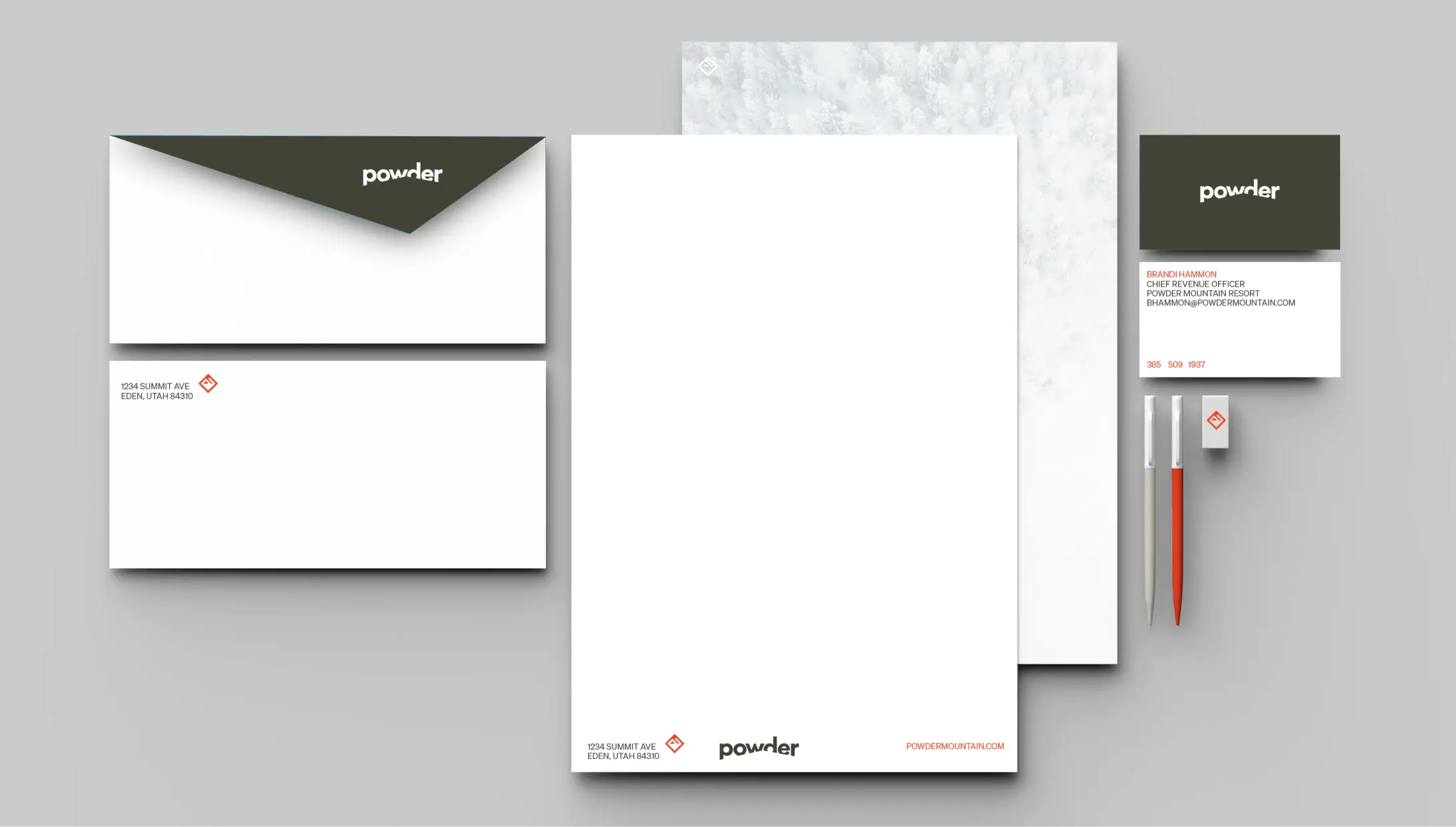
We explored and refined three visual identity directions for the full Powder ecosystem: Powder, Powder Mountain, and Powder Haven, with a fourth entity, Powder Arts, on the horizon. The Powder "m" trademark, the defining mark of the family, was refined and extended across all three directions. Each identity had to define graphically what "New American Alpine Living" looks like, and the final system delivered marks with the range to live on a lift ticket and a luxury sales document in the same breath.
The brand visual mood was defined by a deliberate set of qualities: rugged, raw, dynamic, artisanal, soulful, sophisticated, modern, enduring. These weren't abstract adjectives, they were selection criteria. Every design decision was tested against them. The result is a visual world that feels genuinely alpine, not ski-resort generic, not Colorado-luxury-neutral, but specific to this mountain, this culture, and this buyer.
[.grid-2]


[/.grid-2]
[.grid-3]

[/.grid-3]
The Sales Story
Us Agency structured a complete sales narrative for the digital and physical sales experience, built to move a prospect from first contact to purchase. Six stages: compelling hook, problem frame, solution reveal, reasons to believe, validation, and call to action.
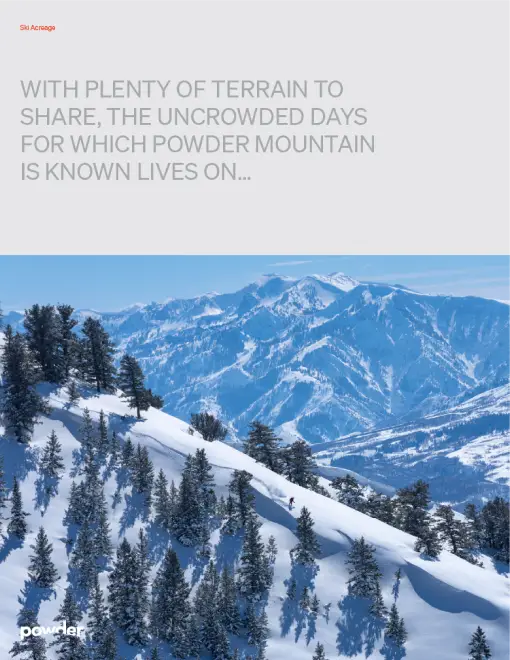
At each stage, the brand does specific persuasive work. The hook activates curiosity. The problem frame names the pain: superficiality is the enemy, not a place to rub elbows, no pretenses, no posturing. The solution reveal delivers the brand promise. The reasons to believe substantiate it: uncrowded by design, four-day powder, world's best sidecountry, an arts program, a community where family is never an afterthought.
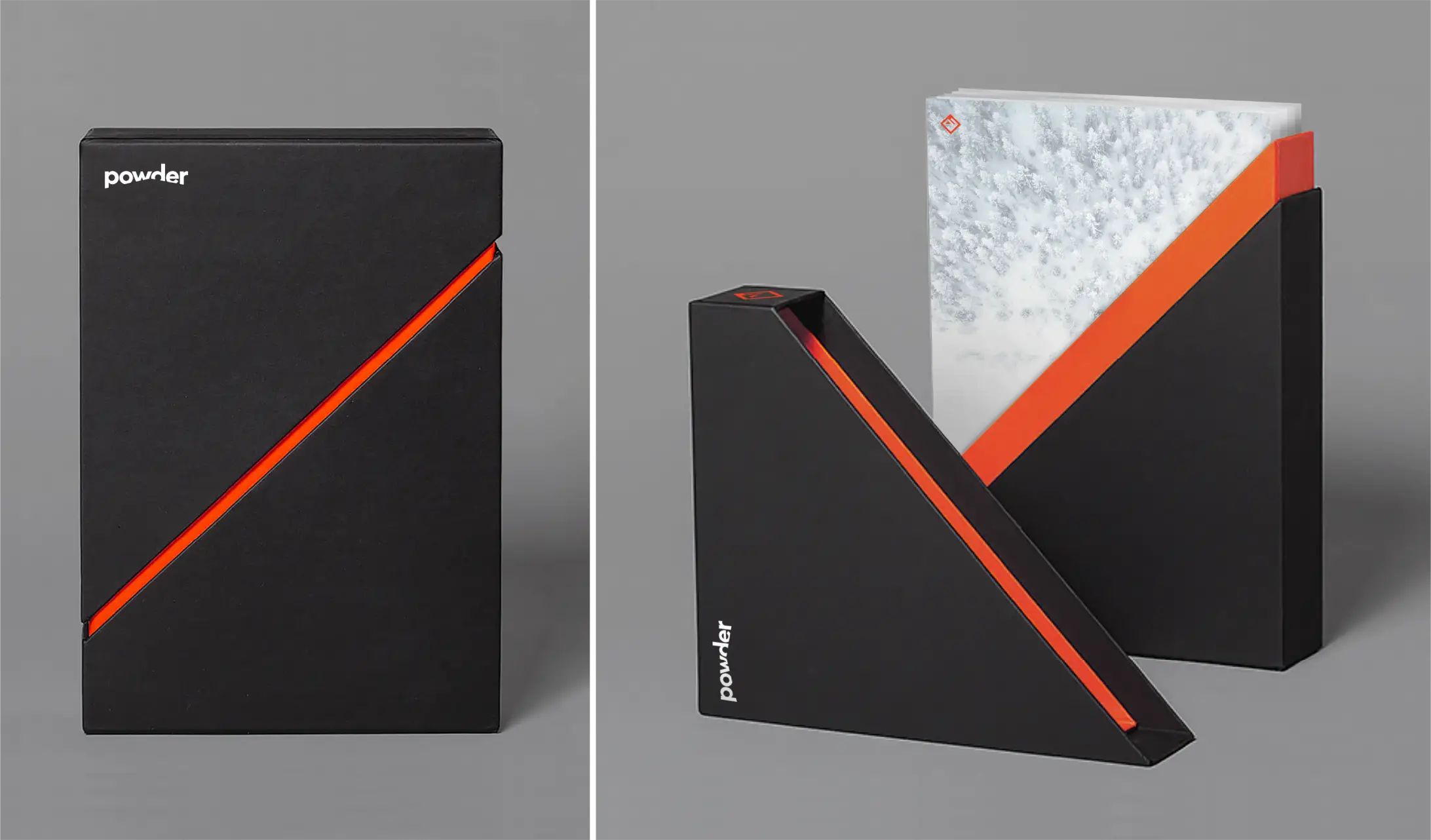
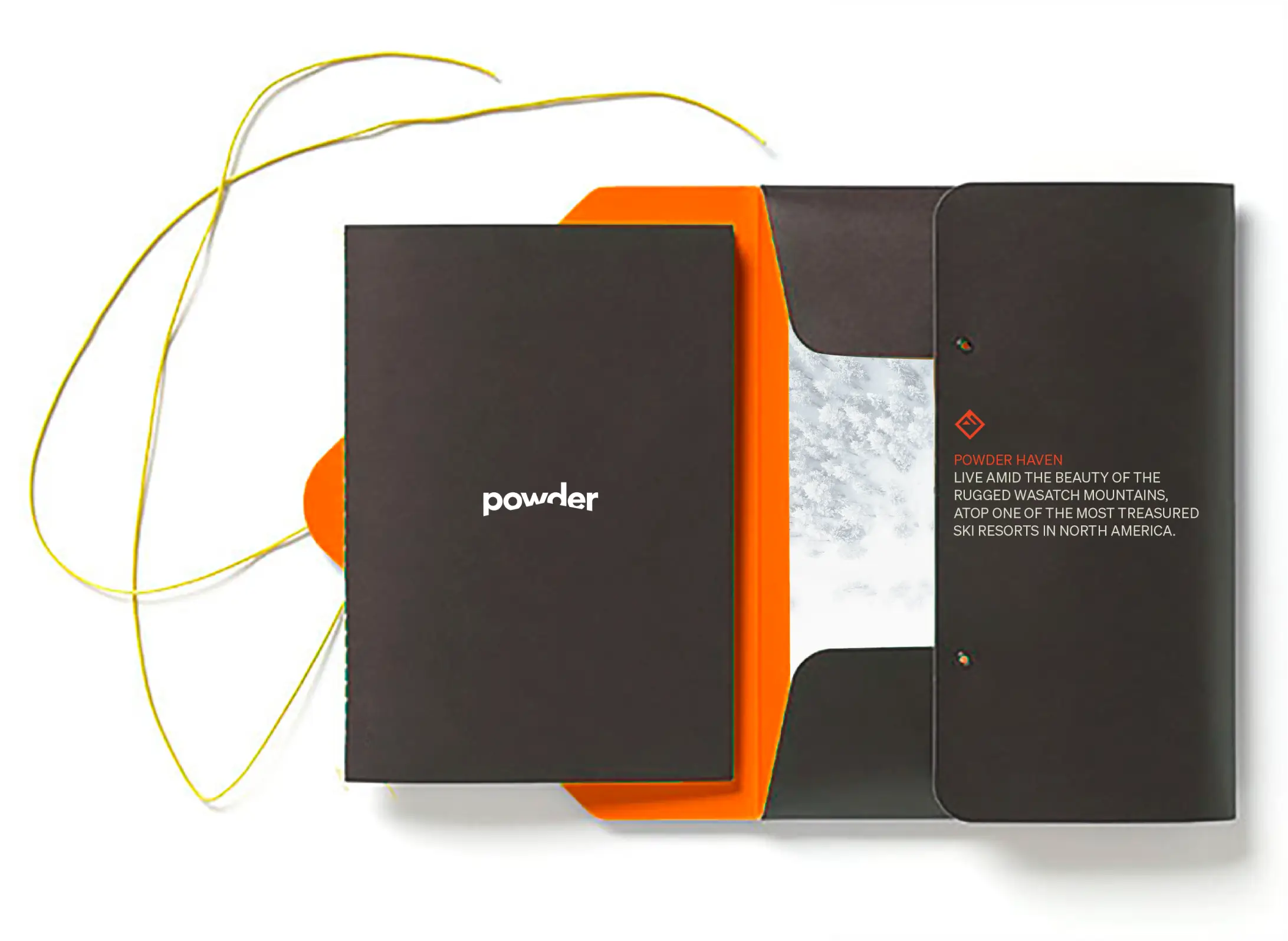
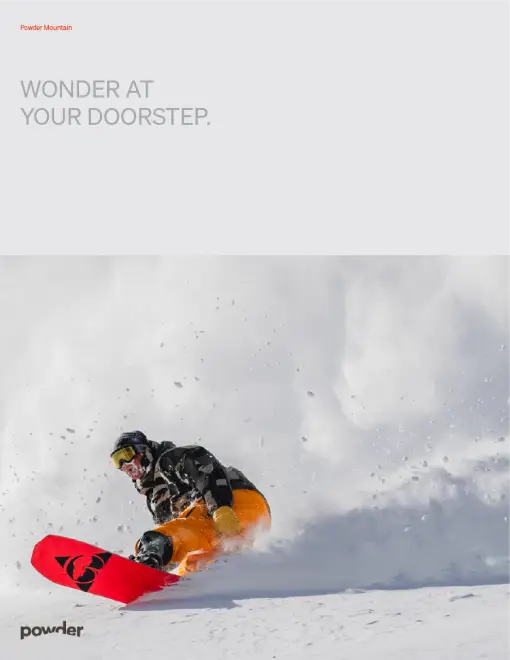
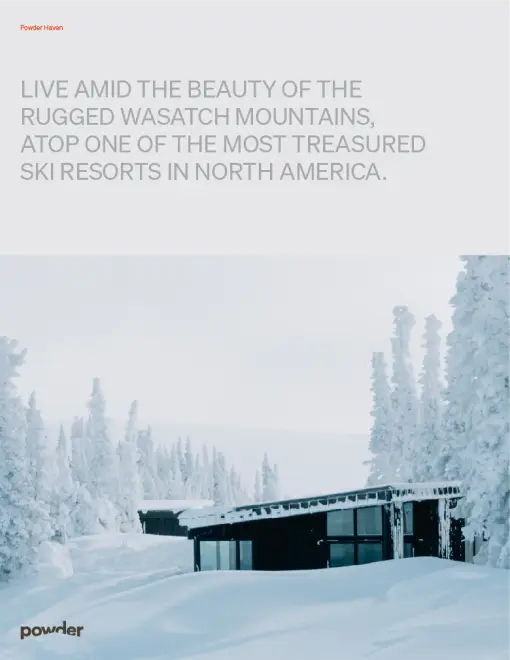
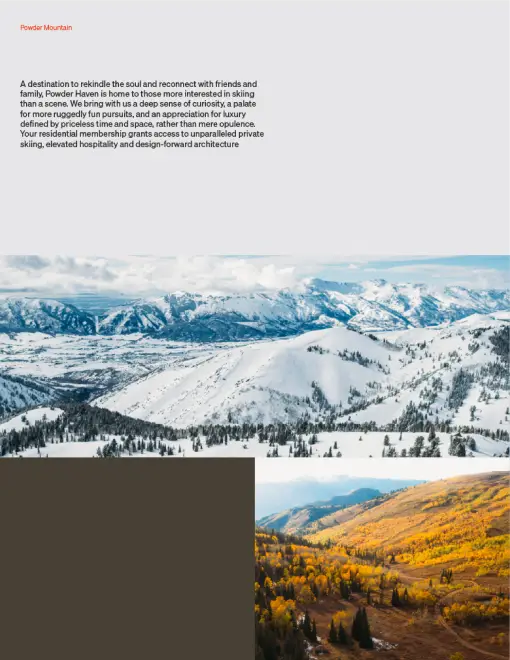
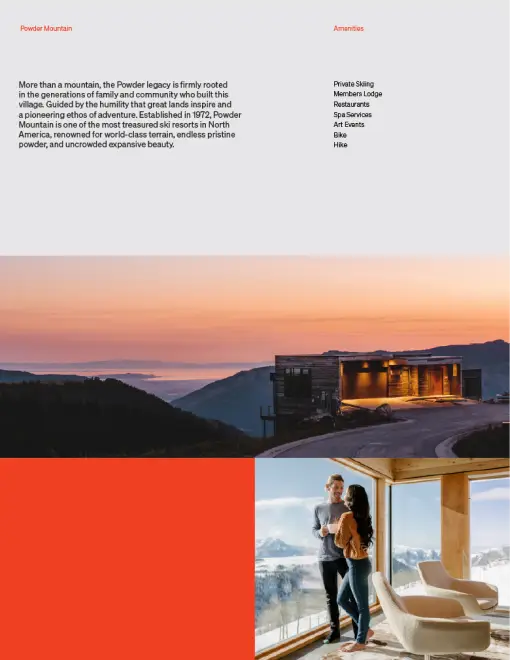
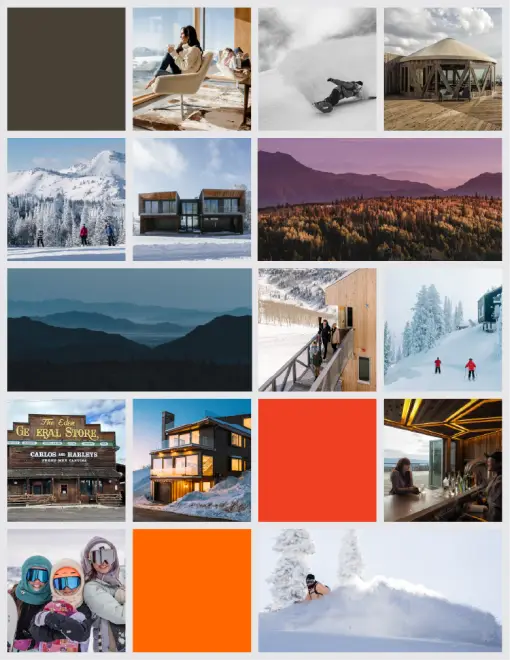
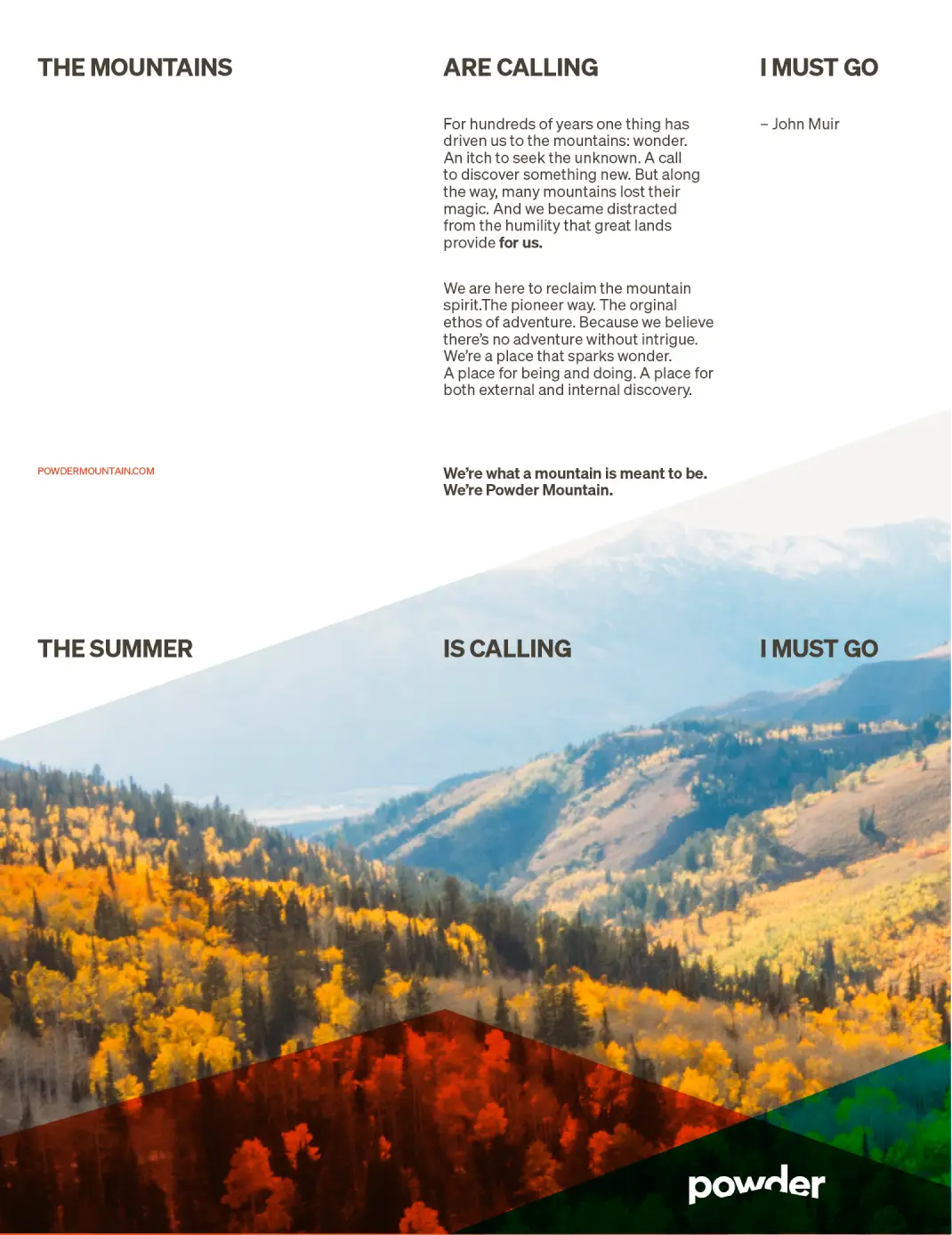
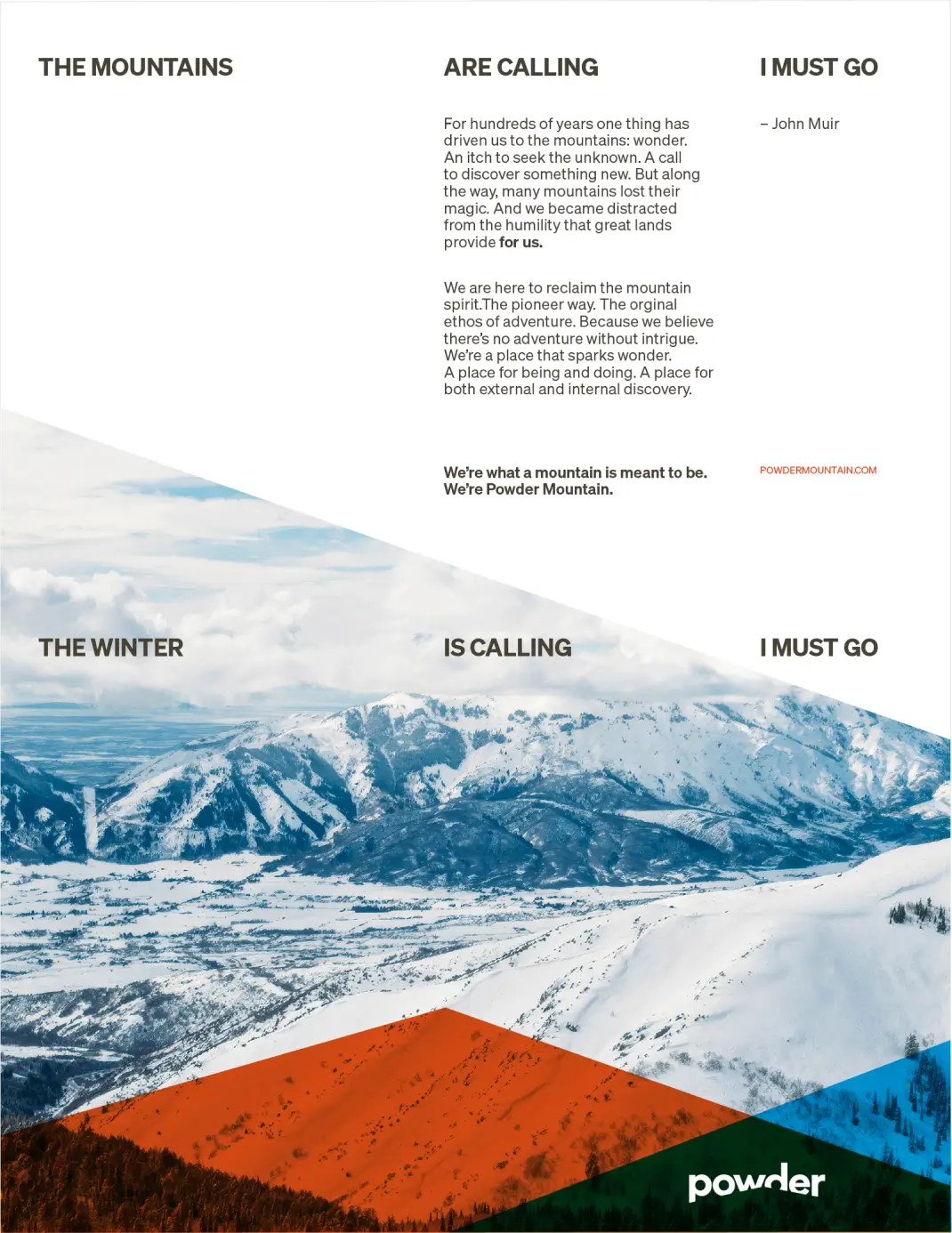
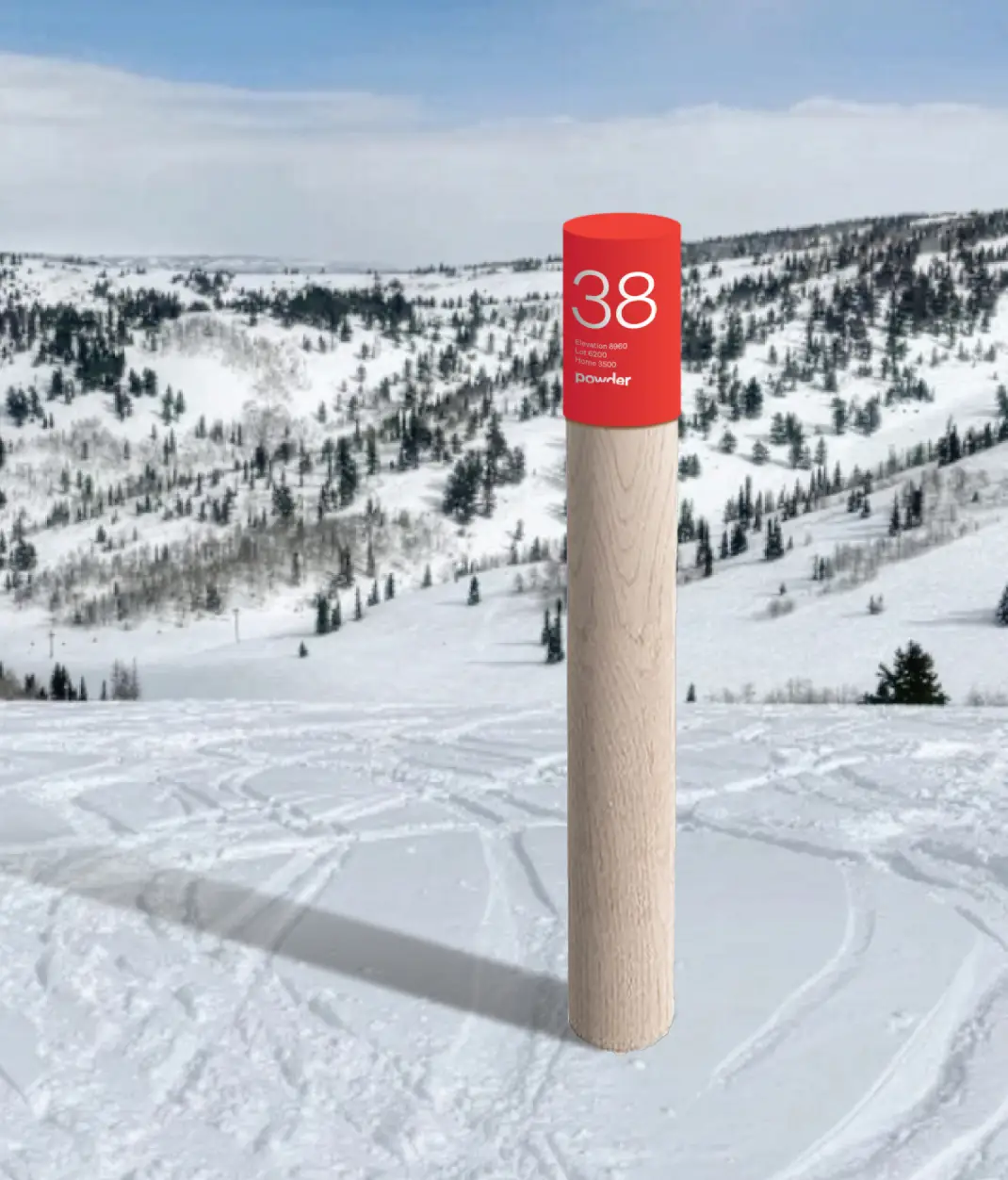
The collateral that brought Powder Haven to life had one job: make the buyer feel the life viscerally before they've ever skied a run.
[.grid-4]
[/.grid-4]
[.grid-2]

[/.grid-2]
The Results
3-4 months
Phase one's 39 homesites sold out in three to four months. Not after the roads were paved. Not after the clubhouse opened. Based solely on renderings. Buyers were committing to a life at Powder Mountain before a single run had been skied on private terrain, which is the strongest possible signal that a brand is doing its job.
42 home/34 homesites
Phase two, 42 homes including 34 homesites and eight developer-built chalets, launched in May 2026 with the reservation list already filling before the public release. Lots start at $2 million. Membership is capped at 650 families. The 2024-25 season added four new lifts. A 73,000-square-foot members' clubhouse broke ground in summer 2026.
You can't brand your way to authenticity. But you can use brand strategy to surface and clarify what a company genuinely is, and build a visual and verbal system that communicates it at every touchpoint. The Grounded Contrarian archetype wasn't invented. It was found in the research, in the language of current members, in the gaps the competitive landscape had left open. A mountain this rare deserved a brand this specific.